Category: Startups

  • The Creator Economy Is Growing — But The Internet Still Feels Fragmented

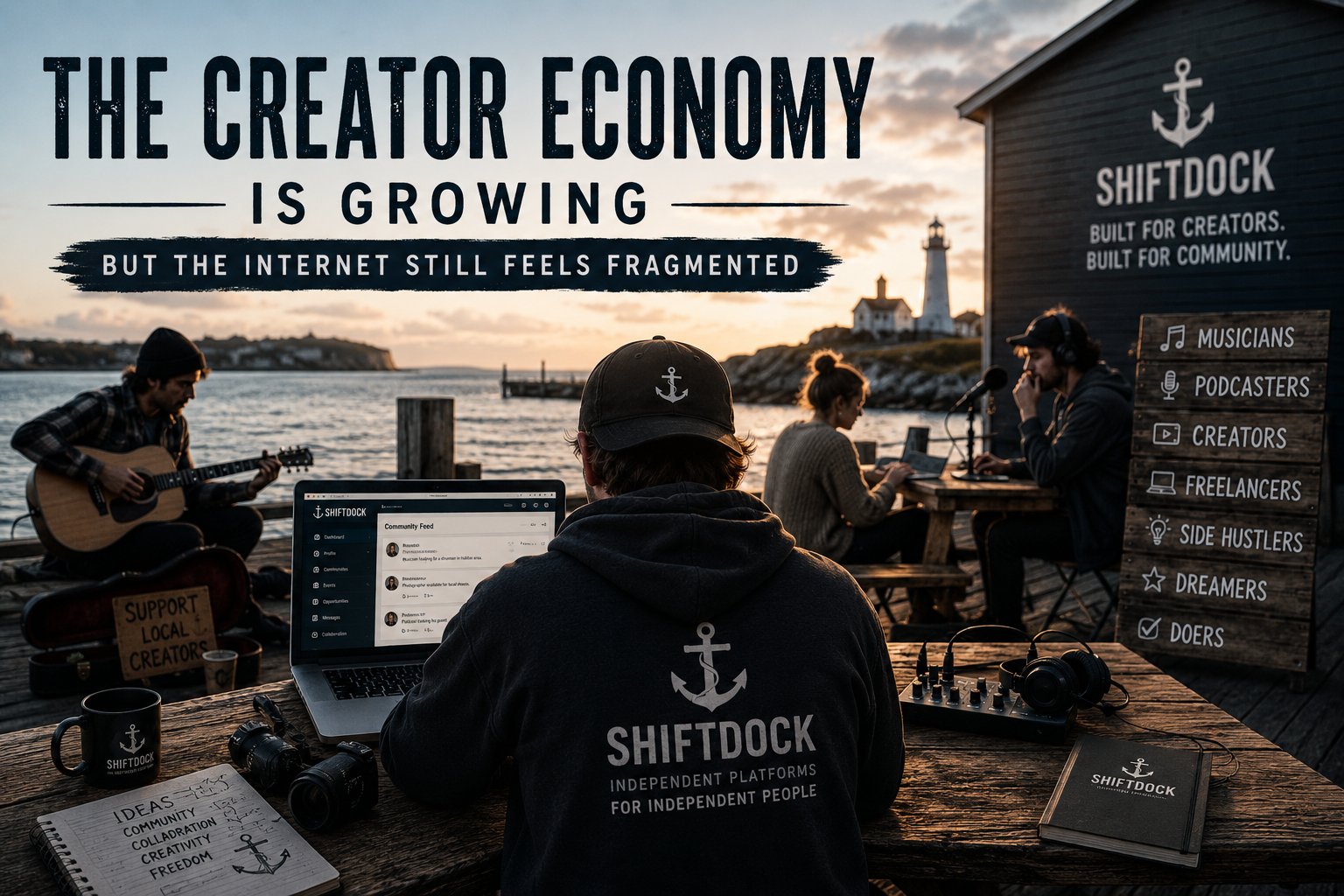
    The Creator Economy Is Growing — But The Internet Still Feels Fragmented

    by Cyril Richards

    More people than ever are trying to build independent lives.

    Freelancing.
    Content creation.
    Podcasting.
    Music.
    Photography.
    Design.
    Remote work.
    Side hustles.
    Online businesses.
    Independent media.

    The creator economy keeps growing, and millions of people are trying to build something outside the traditional system.

    But despite all the technology we have, the internet still feels strangely disconnected.

    Creators are scattered across platforms built mostly for algorithms, advertising, and attention — not collaboration.

    A musician might promote themselves on Instagram, message people through Discord, post opportunities in Facebook groups, upload videos to TikTok, network through LinkedIn, and still struggle to find meaningful local connections.

    A podcaster may spend more time fighting algorithms than actually building relationships.

    Freelancers jump between apps, marketplaces, and social feeds trying to stay visible in systems they don’t control.

    And even though everyone is “connected,” many creators still feel isolated.

    The internet became enormous.
    But community became fragmented.

    The Problem With Algorithm-Driven Platforms

    Most modern platforms are built around one thing:

    Attention.

    The longer people scroll, react, argue, click, and consume content, the more profitable the platform becomes.

    That changes the entire experience.

    Instead of useful networking, people chase visibility.
    Instead of collaboration, people compete for reach.
    Instead of community, conversations become performance.

    Creators are constantly adapting:

    • new algorithms
    • new content formats
    • new engagement tricks
    • new visibility rules

    Every few months the system changes again.

    And the result is exhaustion.

    Not because people hate community.

    But because many people are tired of what online interaction became.

    Smaller Communities Are Starting To Matter Again

    There’s a growing shift happening online.

    People are starting to value:

    • smaller communities
    • direct communication
    • local connections
    • niche groups
    • focused conversations
    • creator-first spaces

    Not everything needs to become viral content.

    Sometimes people just want:

    • to find collaborators
    • promote a local event
    • connect with creators nearby
    • build projects together
    • exchange ideas
    • support independent work

    That’s a completely different kind of internet experience.

    And honestly, it feels more human.

    Why ShiftDock Was Created

    ShiftDock was built around a simple idea:

    What if creators, freelancers, musicians, podcasters, performers, gig workers, and independent people had a place designed around collaboration instead of algorithms?

    Not endless doomscrolling.

    Not outrage.

    Not fighting for visibility every day.

    Just:

    • creator profiles
    • communities
    • collaboration boards
    • direct messaging
    • local networking
    • events
    • opportunities
    • useful interaction

    A place where independent people could actually connect and build things together.

    Not as a replacement for the entire internet.

    But as a smaller, more focused layer built around creators and community.

    The Internet Doesn’t Need More Noise

    The internet probably doesn’t need another giant platform.

    But it may need more spaces that feel intentional again.

    More places where:

    • creators are visible without gaming algorithms
    • communities feel human-sized
    • people can actually collaborate
    • conversations feel real
    • local culture matters
    • independent people can support each other

    That’s the direction ShiftDock is trying to move toward.

    Small at first.

    Local at first.

    Built step by step.

    Because sometimes the future doesn’t start with building something bigger.

    Sometimes it starts with building something more useful.

    ***ShiftDock is still in its early founding stage.***

    Right now the community is small — intentionally small — while we test features, build conversations, improve the platform, and shape the direction together.

    Early members have direct access to the admin, can help influence future features, communities, events, and the overall direction of the platform as it grows.

    This isn’t about building another giant algorithm-driven social network.

    It’s about building a smaller, more useful creator-first community step by step.

    If you’ve ever wanted to be early to something and help shape what it becomes, now is the time.
    www.shiftdock.saltwater-radio.com

  • ATLANTIC CANADIAN CREATOR BUILDS RETRO-INSPIRED 8-BIT GAMES ONLINE

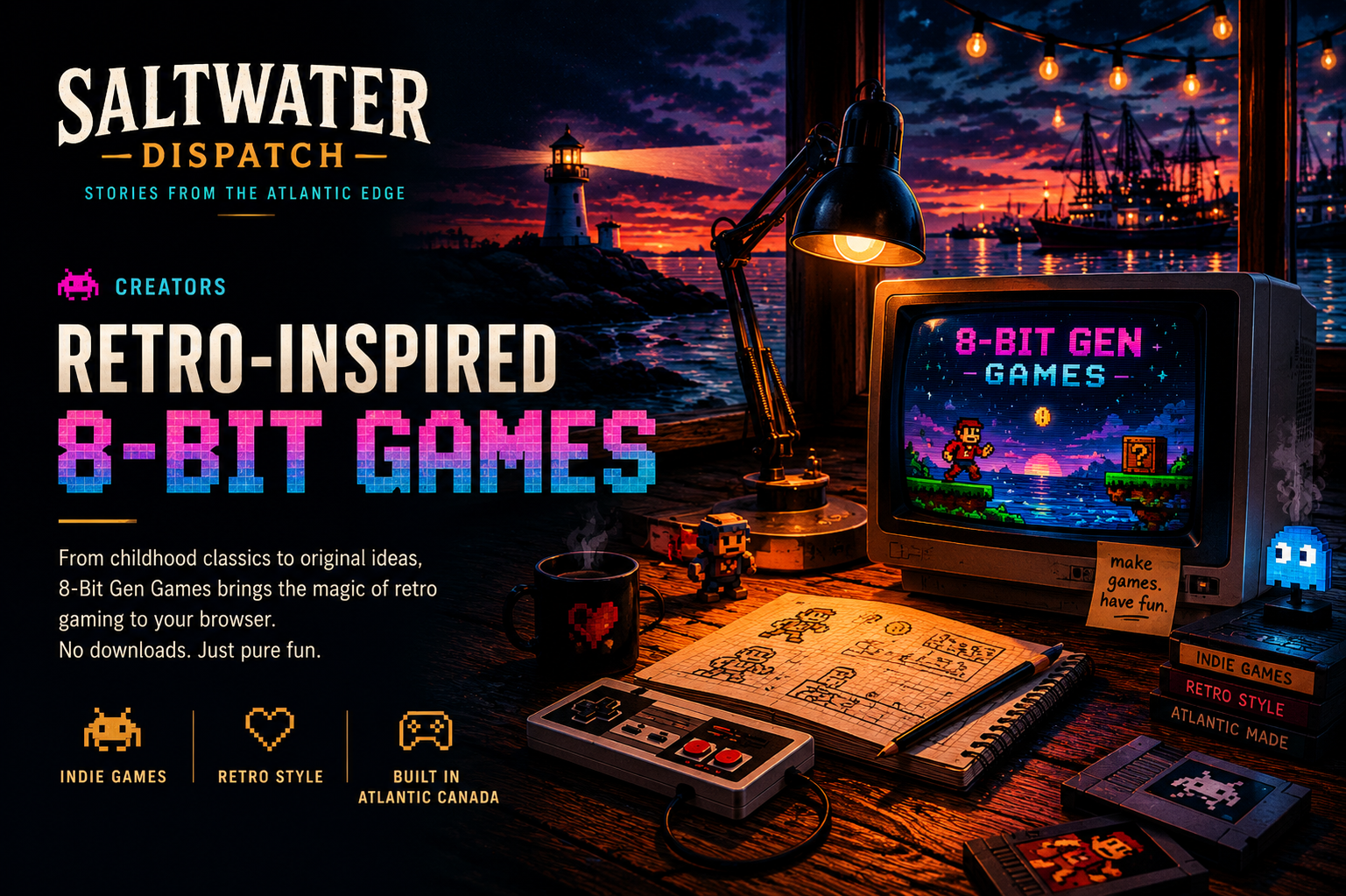
    ATLANTIC CANADIAN CREATOR BUILDS RETRO-INSPIRED 8-BIT GAMES ONLINE

    By Cyril Richards

    There has been a noticeable comeback lately with retro gaming.

    People who grew up with classic systems like Nintendo, Sega, arcade cabinets, and old-school side scrollers are reconnecting with games that feel simple, creative, and fun again. A lot of modern games are massive productions now, but there is still something special about pixel art, straightforward gameplay, and the feeling of sitting down to just enjoy a game without needing a huge learning curve.

    That idea is part of what inspired 8-Bit Gen Games.

    The project focuses on browser-based retro-inspired games that people can jump into quickly without downloads, expensive hardware, or complicated setup. The goal is simple: create games that feel nostalgic while still being fun for modern players.

    What makes the project interesting is that it is being built independently from Atlantic Canada using web technology instead of traditional game studio systems. A lot of people still think game development requires giant companies and massive budgets, but smaller creators now have access to tools that allow ideas to come to life much faster than before.

    Some of the projects currently in development include side-scrolling adventures, retro arcade-inspired concepts, and pirate-themed action games that combine old-school gameplay with modern online accessibility.

    One thing that stands out about 8-Bit Gen Games is that the focus is not only on gaming itself, but also creativity and experimentation. The games are being developed openly online, allowing people to follow along as ideas grow from simple concepts into playable experiences.

    There is also a strong nostalgic influence throughout the project. Anyone who grew up during the NES, SNES, Sega Genesis, arcade, or early computer gaming era will probably recognize some of the inspiration immediately.

    At the same time, the project is trying to introduce younger players to the style and charm of retro gaming in a way that still feels fresh.

    Gaming has changed a lot over the years, but there is a reason pixel art and classic gameplay continue to survive. Good gameplay, creativity, and personality never really go out of style.

    8-Bit Gen Games is still growing, but it represents something larger that is happening online right now: independent creators building their own entertainment instead of waiting for permission from major companies.

    Sometimes the best projects start with a simple idea, a keyboard, and a little bit of imagination.

    www.cyrilrichards.com/8bitgen

  • THE RETURN OF INDEPENDENT EAST COAST MEDIA

    THE RETURN OF INDEPENDENT EAST COAST MEDIA

    By Cyril Richards

    A lot of local media feels different now compared to years ago.

    Some newspapers closed down. Radio stations became more automated. Community stories started getting replaced with national headlines, viral content, and whatever drives the most clicks online. It is hard to blame them completely because the internet changed everything, but something important definitely feels missing sometimes.

    That was one of the ideas behind Saltwater Radio.

    The goal was never to become some giant corporate media company. The idea was actually much simpler than that. Create a place that supports local voices, local creators, local music, businesses, events, and community culture around Atlantic Canada.

    There are a lot of talented people here doing interesting things. Musicians recording songs from home studios. Small businesses trying to grow. Independent wrestlers putting on shows. Runners building communities. Artists, creators, writers, and everyday people with stories worth sharing.

    A lot of them just need somewhere to be seen.

    One thing the internet did well was make it easier for people to create. The difficult part now is getting noticed. Most large social media platforms reward outrage, trends, and massive followings. Smaller creators can get buried pretty quickly.

    Saltwater Radio was built with a different mindset.

    Instead of chasing viral content all the time, the focus is more on community, creativity, and identity. Especially East Coast identity. Atlantic Canada has its own culture, personality, humour, work ethic, and stories. There is value in that.

    That is also where Saltwater Dispatch started coming from.

    The idea is to create a digital space where local stories can actually live and grow. Startup features, community stories, running articles, local business spotlights, wrestling coverage, music projects, creator interviews — all of it matters because it reflects real people building real things around here.

    Not everything has to be polished corporate media to matter.

    Sometimes people connect more with authenticity than perfection.

    Saltwater Radio and Saltwater Dispatch are still growing, but the long-term goal is simple: create a platform where Atlantic Canadian creators and communities feel represented again.

    In a world full of noise, sometimes local voices matter the most.

    www.saltwater-radio.com

  • WHY SHIFTDOCK WAS CREATED

    WHY SHIFTDOCK WAS CREATED

    By Cyril Richards

    For a long time now, social media has felt less social.

    Most platforms today are built around algorithms, advertising, outrage, and trying to keep people scrolling as long as possible. Somewhere along the way, it started feeling like regular people, small businesses, creators, musicians, and communities got pushed into the background unless they were willing to constantly pay for attention.

    That was one of the main reasons ShiftDock was created.

    The idea did not start as a giant tech company plan or some investor-backed startup. It actually started from a simple thought: what if there was a platform that felt more local, more community-driven, and more useful for everyday people again?

    Living in Atlantic Canada, community still matters here. Local events matter. Local businesses matter. Independent creators matter. But online, it can sometimes feel difficult for smaller voices to be seen. Large platforms are crowded, fast-moving, and controlled heavily by algorithms. Even community groups often feel disconnected now.

    ShiftDock was built around the idea of bringing some of that connection back.

    The name itself comes from the idea of a dock. Traditionally, docks were places where people crossed paths. Workers, travelers, fishermen, musicians, merchants, and communities all gathered there. Information was shared there. Stories were shared there. Opportunities were shared there.

    That is the feeling ShiftDock is trying to recreate digitally.

    The platform is designed to give people a place to connect, share projects, promote events, support local businesses, post ideas, and build communities without feeling buried under endless advertisements and viral content.

    One thing I personally noticed over the years is how many talented people around Atlantic Canada struggle to get visibility online. Whether it is musicians, runners, artists, wrestlers, side businesses, community organizations, or independent creators, many of them are doing incredible things but fighting against systems that were not really designed for them.

    ShiftDock is still growing and evolving, but the goal remains simple: create a platform that feels more human again.

    Not everything needs to go viral.

    Sometimes people just want to connect with their community, share what they are building, and feel like they are actually being seen.

    That is what ShiftDock is about.

    www.shiftdock.saltwater-radio.com